
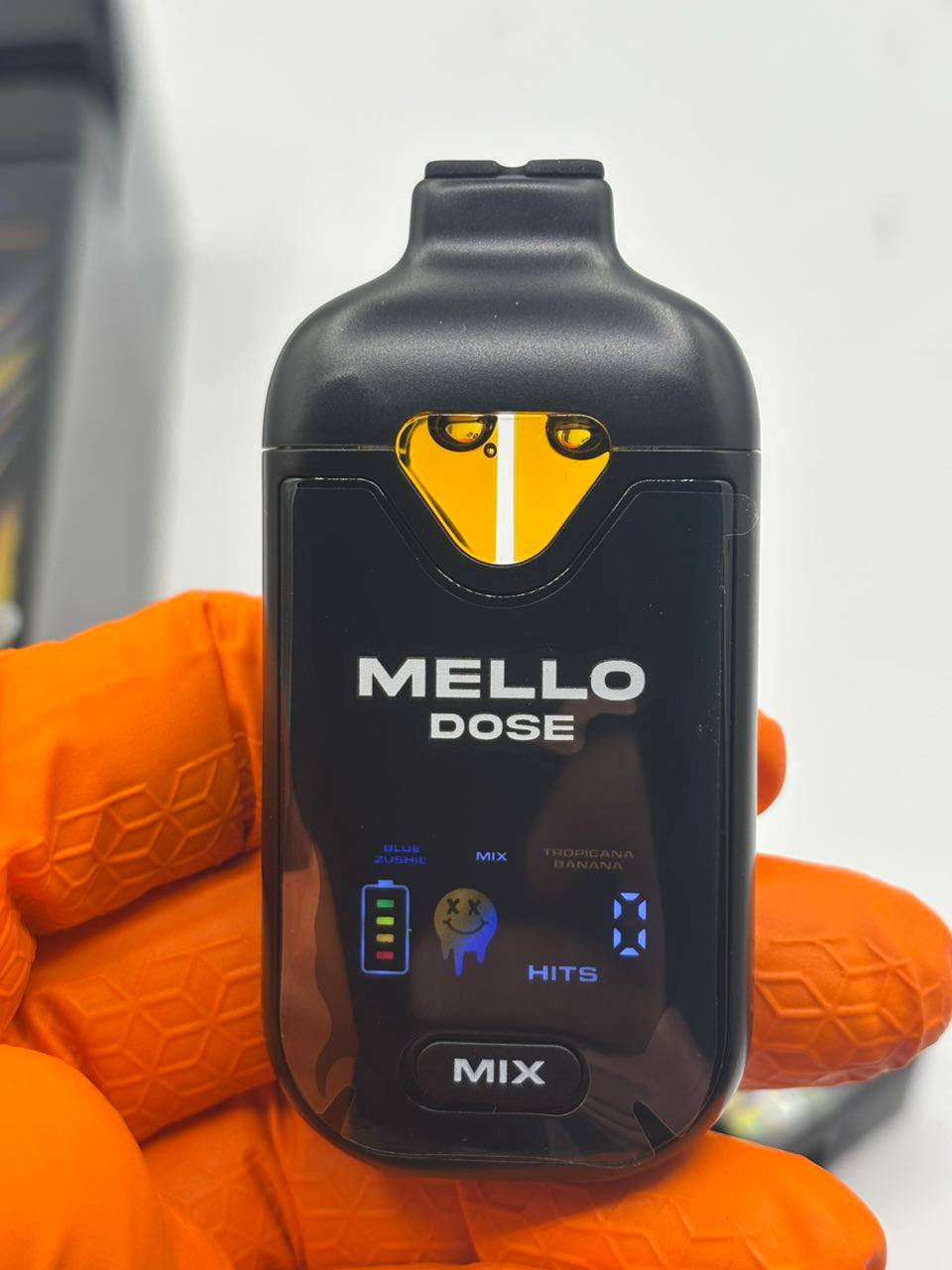
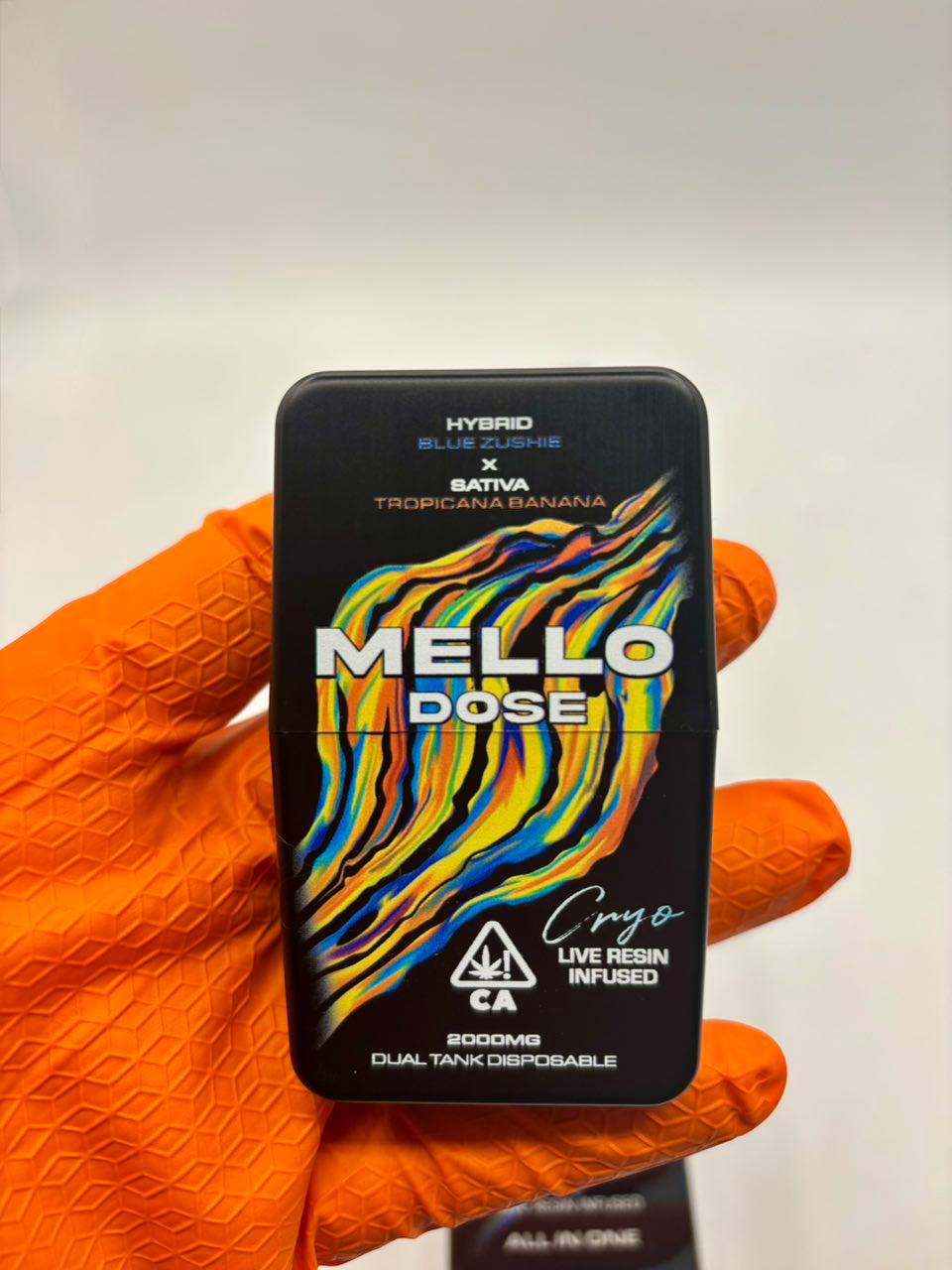
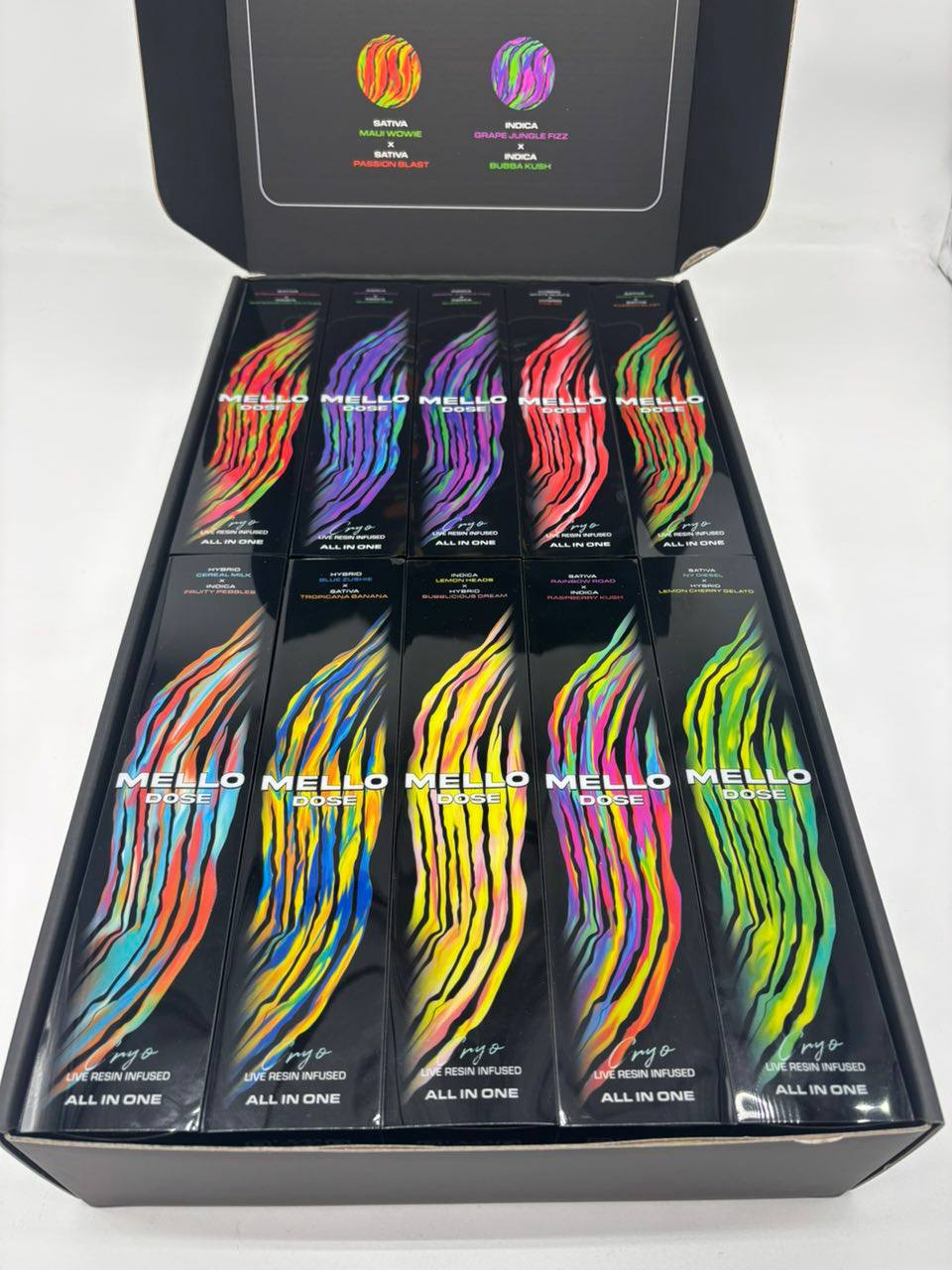
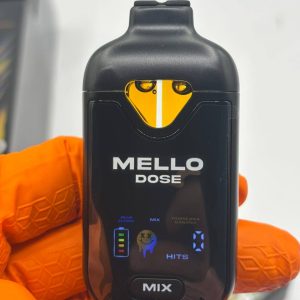
Mello Dose Dual Tank 2G Disposable
Product Overview
The Mello Dose Dual Tank 2G Disposable is a compact disposable device designed around a dual–tank format and a combined 2-gram capacity. Its design separates the device into two tank sections, creating a format that differs from a conventional single-tank disposable. The overall structure is intended to provide a straightforward, portable format without the additional hardware associated with a reusable vape system.
Because product specifications can vary by production batch, packaging version, and market, the information printed on the original package remains the most reliable source for details such as ingredients, cannabinoid content, flavor names, manufacturing information, and applicable warnings.
The device is presented as a disposable product, meaning the hardware is not generally designed around a reusable cartridge-and-battery system. Instead, the tank and battery are contained within one compact unit. Once the product reaches the end of its intended service life, the complete device is normally treated as a disposable electronic product rather than as a refillable vaporizer.
Dual-Tank Design
One of the defining characteristics of this model is its dual-tank construction. Instead of relying on one reservoir, the device incorporates two separate tank sections within the same overall body.
This configuration gives the product a different physical layout from standard single-reservoir disposables. In addition, the two-tank structure may be associated with separate contents, depending on the particular version and labeling. Therefore, the exact relationship between the two tanks should be confirmed through the product packaging rather than assumed from the device name alone.
The dual-tank concept can also influence the appearance and proportions of the hardware. Nevertheless, the device remains designed around portability. Its enclosed construction keeps the main components together, while the disposable format removes the need for a separate external battery or cartridge.
2-Gram Capacity
The product name identifies a combined 2-gram format. However, capacity alone does not establish the strength, cannabinoid profile, or effects associated with a product.
For that reason, the 2-gram figure should be understood as a stated product capacity rather than as a measurement of potency. The actual contents and concentrations should be checked against the manufacturer’s label and any applicable laboratory information.
Furthermore, consumers may encounter different versions of products with similar names. Packaging details can therefore provide important distinctions between models, editions, and batches.
Physical Format
The Mello Dose Dual Tank 2G Disposable uses an integrated hardware format. The battery, internal tank system, heating components, and mouthpiece are housed within the same general device.
This approach creates a simple physical profile. There is no separate cartridge that needs to be attached to a compatible battery, and the device is not presented as a traditional refillable vape system.
The enclosed structure also gives the product a self-contained appearance. As a result, the device can be recognized by its unified body rather than by a removable cartridge and external power source.
Exact dimensions, battery capacity, charging specifications, materials, and internal components should not be assumed unless those details are confirmed by official product documentation.
Tank Configuration
The dual-tank arrangement is particularly relevant when identifying this product. Two reservoir sections are incorporated into one disposable body, although their exact configuration depends on the specific version.
Some products using a dual-tank concept can have different contents associated with each side. However, that feature should never be inferred without checking the label. The packaging should identify the relevant contents, quantities, and other product information where required.
This distinction matters because similarly named devices may have different configurations. Therefore, the physical appearance alone may not provide enough information to determine what each tank contains.
Hardware Construction
Disposable vaporizer hardware generally combines several internal components into a single enclosure. These can include a battery, heating elements, airflow pathways, reservoirs, and a mouthpiece.
In a dual-tank design, additional internal separation is required to keep the two reservoir areas distinct. The resulting construction can therefore be more involved than that of a conventional single-tank disposable.
Even so, the external format remains relatively compact. The internal components are enclosed inside the device body, while the mouthpiece provides the point of contact with the vapor pathway.
Specific construction materials should be verified through manufacturer documentation. Terms such as metal, plastic, ceramic, or glass should not be attributed to a product unless they are confirmed by an authoritative source.
Product Identification
Accurate identification is important because disposable products can appear similar across brands and product generations. The printed brand name, model name, batch information, packaging, and labeling can help distinguish one version from another.
The Mello Dose name should therefore be considered alongside the complete package information. In particular, the label may contain information about the formulation, quantity, manufacturer, batch number, date information, warnings, and legal requirements.
Additionally, authenticity information may be provided where applicable. Any verification feature appearing on the packaging should be checked through the manufacturer’s official verification method rather than through an unrelated website.
Label Information
The product label provides the most appropriate source for formulation-specific information. Depending on the market, packaging may identify ingredients, cannabinoid concentrations, net contents, batch details, manufacturing information, and required warnings.
Because labeling requirements differ between jurisdictions, the information displayed on one version may not match another version sold elsewhere.
For this reason, generic descriptions should not replace the original label. The packaging remains the better reference for determining what is actually contained in a particular unit.
Flavor and Formulation Details
Flavor names and formulation details are version-specific. A product description should therefore avoid assigning a particular flavor or cannabinoid profile unless the information has been verified for the exact model.
The same applies to claims about terpene content, extraction methods, cannabinoid ratios, or laboratory testing. Such information can vary between batches and editions.
Where laboratory documentation is available, it can provide more precise information than a general product description. Test results may identify cannabinoid concentrations and other measured characteristics relevant to the particular batch.
Portability
The integrated disposable format is built around portability. A single device contains the primary components required for its intended use, so a separate cartridge system is not part of the basic design.
The compact format can also make the product visually simple. There are fewer external components to handle compared with a modular vaporizer consisting of a battery and removable cartridge.
However, portability does not remove the need for responsible storage. The device should be kept according to the manufacturer’s storage guidance and away from conditions that could damage electronic components or compromise the product.
Battery System
A disposable device contains an internal battery that powers its heating system. The exact battery chemistry, capacity, charging design, and activation method should be confirmed from the manufacturer’s specifications.
Some disposable devices are designed for single-use operation, while others include rechargeable hardware despite remaining disposable products. Therefore, charging capabilities should not be assumed from the product category alone.
If the packaging does not identify a charging feature, users should not attempt to modify the device or connect it to an external power source.
Airflow and Heating
The heating system converts the contents of the reservoir into an inhalable aerosol. Airflow passes through the device’s internal pathway, while the heating component is activated according to the hardware design.
The exact heating technology used by the Mello Dose model should be verified through official documentation. Claims regarding coil materials, temperature control, ceramic heating, or specific heating technology should not be presented as confirmed unless they are supported by manufacturer information.
Similarly, performance characteristics can vary depending on the formulation, battery condition, airflow design, and individual unit.
Device Appearance
The appearance of a disposable device can change between editions and production runs. Branding, printed graphics, packaging colors, and other visual details may therefore differ from one version to another.
For accurate identification, the physical device should be compared with the packaging from the same product rather than with photographs from unrelated listings.
A matching package can also provide useful information about the product’s stated capacity and formulation. As a result, packaging remains an important part of product identification.
Disposable Format
Unlike a reusable vaporizer, a disposable product is designed around an integrated hardware system. The reservoir and battery are contained within the same unit.
This design reduces the number of separate components associated with the product. However, it also means that the device is not intended to be rebuilt, refilled, or modified unless the manufacturer explicitly states otherwise.
Internal modification can damage the battery, heating system, or reservoir. Consequently, damaged or malfunctioning hardware should be handled according to applicable disposal and safety guidance.
Packaging
Original packaging can provide several important details about a disposable product. These details may include the product name, stated quantity, formulation information, manufacturer details, warnings, batch identification, and other required labeling.
Furthermore, packaging can help distinguish authentic products from unrelated or incorrectly labeled items.
Because packaging changes over time, an older photograph should not automatically be treated as proof of the appearance of a current edition. The most reliable information comes from the packaging supplied with the particular unit.
Authenticity and Verification
Authenticity is an important consideration when purchasing branded disposable products. Counterfeit devices can have packaging or visual designs that resemble legitimate products.
Where an official verification system exists, the manufacturer’s designated method should be used. Verification codes should not be entered into unfamiliar websites, and suspicious packaging should be treated cautiously.
In addition, inconsistencies in spelling, printing quality, labels, batch information, or packaging construction can indicate that further verification is appropriate.
Storage Considerations
Electronic disposable products are affected by their surrounding environment. Excessive heat, moisture, physical pressure, and prolonged exposure to unsuitable conditions can damage the device.
The manufacturer’s storage recommendations should therefore take priority. In general, electronic devices should be kept away from extreme temperatures and sources of physical damage.
The product should also remain inaccessible to children and pets. Packaging and local regulations may provide additional storage and disposal requirements.
Safety Information
A disposable vaporizer contains an electronic battery and should be treated as an electronic device. It should not be opened, punctured, crushed, burned, or deliberately modified.
If the device becomes unusually hot, damaged, swollen, leaking, or otherwise abnormal, it should no longer be treated as a normal functioning product. Appropriate local safety and disposal guidance should be followed.
Additionally, the contents should be considered according to the information printed on the package. Cannabis-derived products can have significant effects, and laws governing possession, sale, and use vary substantially between jurisdictions.
Responsible Product Information
A clear product description should distinguish confirmed specifications from assumptions. This is especially important with products that appear in multiple editions or configurations.
For the Mello Dose Dual Tank 2G Disposable, the confirmed characteristics from the product name are its Mello Dose branding, dual-tank format, disposable construction, and stated 2-gram capacity. Other details should be confirmed through the exact packaging or official documentation.
This approach helps prevent inaccurate claims about potency, flavor, ingredients, battery technology, or performance.
Product Experience
The physical experience of using a disposable vaporizer can depend on several variables. Hardware design, formulation, airflow, battery condition, and individual sensitivity can all influence how the product is perceived.
Therefore, broad claims about taste, vapor production, duration, or effects should not be treated as universal characteristics.
The dual-tank structure also introduces another variable because different versions may use different tank configurations. The package information provides the clearest way to understand the particular product.
Comparison With Single-Tank Disposables
A single-tank disposable generally relies on one reservoir, while a dual-tank device contains two separate reservoir sections within its overall construction.
This distinction can affect the internal design and product format. Nevertheless, both products can retain the basic characteristics of a disposable system, including integrated hardware and a self-contained body.
The main difference is therefore the reservoir configuration rather than an automatic indication of greater potency or superior performance.
Capacity Versus Potency
It is useful to separate capacity from potency when discussing a 2-gram disposable. Capacity refers to the stated amount of material contained in the product, whereas potency describes the concentration of relevant active compounds.
Consequently, a larger stated capacity does not automatically mean a stronger formulation. Laboratory results and package labeling are more appropriate sources for determining potency.
This distinction also helps create more accurate product information. Instead of making unsupported performance claims, a description can focus on measurable specifications and confirmed design characteristics.
Manufacturing Information
Manufacturing details can differ according to product edition and market. Batch numbers and related identifiers are often used to connect a product with specific production information.
When available, laboratory documentation can provide additional evidence about the contents of an individual batch. However, a test result from another product or another batch should not be presented as evidence for the exact unit being described.
For that reason, product documentation should remain tied to the corresponding batch whenever possible.
Market and Regulatory Considerations
Cannabis and vapor products are subject to different laws depending on location. Requirements may address age restrictions, labeling, packaging, testing, possession, sale, advertising, and disposal.
Therefore, information suitable for one market may not apply to another. The applicable local rules should be considered separately from the manufacturer’s product specifications.
A product description also should not imply that a particular product is legal everywhere simply because it is commercially available somewhere.
Why Accurate Specifications Matter
Accurate specifications help readers understand what a product actually is. In the case of a dual-tank disposable, the most useful information includes the stated capacity, tank configuration, hardware format, packaging details, and verified formulation information.
Meanwhile, unsupported claims can create confusion. Statements about effects, duration, ingredients, or technical features should be backed by reliable documentation before they are treated as factual.
A straightforward description therefore provides more useful information than exaggerated performance language.
The Mello Dose Dual Tank 2G Disposable is a self-contained disposable device identified by its dual-tank configuration and stated 2-gram capacity. Its integrated design combines the primary hardware components into one compact unit, distinguishing it from reusable cartridge systems and conventional single-tank formats.
The dual-tank construction is the product’s most notable physical characteristic. However, the exact contents and configuration of each tank depend on the specific version and should be confirmed through the original packaging.
Likewise, details involving potency, flavor, ingredients, battery specifications, heating technology, and laboratory results should be taken directly from authoritative product documentation. Packaging can also help verify the exact edition and batch.
Overall, the product is best described through its confirmed physical characteristics rather than unsupported claims about performance or effects. The stated 2-gram capacity, dual-reservoir design, integrated hardware, and disposable format provide the basic framework for identifying the device, while the package label supplies the additional information needed to understand a particular unit accurately.
Mello Dose Dual Tank 2G Disposable — Additional Product Information
Design and Everyday Handling
The compact construction of the Mello Dose Dual Tank 2G Disposable reflects the general design philosophy of integrated disposable devices. Instead of separating the battery, cartridge, and other components, the main hardware is contained within one body.
This arrangement can make the physical structure relatively straightforward. The exterior provides the enclosure, while internal components manage the reservoir system, heating mechanism, airflow, and power supply.
Because the device contains several internal components, it should be handled as a complete electronic product. Excessive pressure, drops, punctures, or attempts to dismantle the housing can damage internal parts.
The exterior design can also vary between production versions. Graphics, branding, dimensions, and other visual details should therefore be verified against the specific packaging associated with the unit.
Understanding the Dual-Tank Structure
The dual-tank format distinguishes this device from products built around a single reservoir. Two internal sections are incorporated into the overall hardware, although their exact operation depends on the particular model.
The two sections may have different contents in certain versions, but that detail should not be assumed without supporting documentation. Product labels and official specifications should be used to determine whether the tanks contain different formulations, flavors, or other configurations.
This distinction is particularly important because the product name alone does not necessarily explain every feature of the internal system.
The dual-tank construction can also require additional internal pathways and controls. Consequently, the device should not be opened in an attempt to inspect or alter those components.
Product Capacity
The stated 2-gram capacity is an important identifying specification. However, it should be interpreted carefully.
Capacity describes the quantity identified for the product and does not independently establish cannabinoid concentration or expected effects. A product with a stated 2-gram capacity can contain different formulations depending on the particular edition or batch.
For accurate information, the package label should be checked for the net contents and formulation details. Where applicable, laboratory documentation can provide additional information about measured cannabinoid concentrations.
This separation between capacity and potency helps maintain accurate product information and avoids confusing two different specifications.
Internal Components
Although the exact internal construction should be confirmed by the manufacturer, disposable vaporizer systems commonly incorporate a battery, heating components, reservoir sections, airflow pathways, and a mouthpiece.
In a dual-tank design, the internal structure must accommodate two reservoir areas rather than one. The architecture can therefore differ from that of a conventional single-tank device.
The components are enclosed within the housing during normal operation. As a result, the product is not intended to function as a user-serviceable device unless the manufacturer specifically identifies it as such.
Mouthpiece Design
The mouthpiece forms the final section of the vapor pathway. It connects the internal airflow system with the point from which the aerosol exits the device.
The exact shape and material of the mouthpiece can differ between product versions. For that reason, specific material claims should only be made when they are supported by official documentation.
Keeping the mouthpiece and exterior clean can help preserve the physical condition of the device. However, cleaning methods should not involve liquids entering the internal electronic or reservoir sections.
Airflow System
Airflow is an important part of any vaporizer’s physical operation. When airflow passes through the device, the heating system interacts with the material contained within the reservoir to produce an aerosol.
The precise airflow mechanism used in this model is dependent on its hardware design. Some devices rely on automatic airflow activation, while others use different control systems.
Unless the manufacturer confirms the exact mechanism, the activation method should not be described as a specific technology. Product packaging and documentation remain the appropriate sources for this information.
Heating System
The heating component is responsible for converting the reservoir contents into an aerosol. Its design can influence airflow behavior and the overall operation of the device.
However, technical terms such as ceramic coil, mesh coil, temperature control, or specific heating temperatures should not be attributed to the Mello Dose model without verified documentation.
Different production versions can use different hardware. Therefore, technical specifications should always be connected to the exact model and batch whenever possible.
Battery Operation
An integrated battery supplies power to the heating system. The battery is housed within the device rather than being designed as a separate removable component.
Battery specifications such as capacity, voltage, chemistry, and charging method can vary. Consequently, these details should be obtained from the manufacturer’s documentation rather than estimated from the physical size of the device.
The battery should also be protected from physical damage. Devices that show signs of swelling, severe damage, overheating, or other unusual behavior should not be treated as normal functioning units.
Rechargeable Versus Non-Rechargeable Hardware
The word “disposable” does not by itself establish whether a device contains rechargeable electronics. Some disposable-format products include rechargeable batteries, while others are designed around a single-use power system.
For that reason, the presence or absence of a charging port should be confirmed on the exact product.
A charging cable or external power source should not be connected to a device unless the manufacturer has specifically designed the hardware for charging. Improvised charging can create a battery-safety risk.
Product Packaging
Packaging serves as an important source of product information. It can identify the model, quantity, formulation, manufacturer, batch, warnings, and other details required by the applicable market.
The package can also provide information that is not visible from the device itself. This may include ingredients, cannabinoid percentages, testing information, or authenticity features.
Because product packaging can change over time, the latest official documentation should be considered more reliable than older photographs found elsewhere.
Batch Information
A batch number can help connect a product with a specific production run. When laboratory testing is available, the batch identifier can also help determine whether a certificate applies to the particular product.
This distinction is important because laboratory results from one batch should not automatically be applied to another.
Consumers reviewing test information should therefore compare the batch or lot information on the certificate with the corresponding information on the product packaging.
Laboratory Testing
Where laboratory testing is provided, the results can offer additional information about the contents of a particular product or batch.
Testing may identify cannabinoid concentrations and other measured characteristics. The precise information included depends on the laboratory and applicable regulations.
A laboratory report should be interpreted in connection with the product’s batch identification. It should not be assumed that a report from an unrelated product represents the contents of another unit.
Ingredient Information
Ingredient information should come directly from the product’s official labeling. Formulations can differ between versions, and similar product names do not guarantee identical ingredients.
For this reason, general assumptions about carrier ingredients, terpenes, flavor compounds, extracts, or other substances should be avoided unless the manufacturer has identified them.
People with known sensitivities should pay particular attention to the complete ingredient information supplied with the specific product.
Flavor Identification
Flavor information can vary according to edition. A dual-tank product may also have a configuration that associates different contents with separate tank sections.
However, the product name alone does not provide enough evidence to identify a particular flavor combination.
The exact flavor names should therefore be taken from the package or official product documentation. This approach prevents an older or unrelated version from being confused with the specific unit being described.
Appearance and Branding
Branding is one of the easiest ways to recognize a product, but appearance alone does not establish authenticity.
Printed graphics, logos, typography, packaging finishes, and other design elements may change between editions. Counterfeit products can also reproduce visual features associated with genuine products.
Authenticity should therefore be evaluated using official verification information whenever such a system is available.
Product Storage
Storage conditions can influence the physical condition of electronic disposable devices. Extreme temperatures, moisture, and physical pressure can affect batteries and other internal components.
The manufacturer’s recommended storage conditions should take priority. The product should also be kept in a secure location where children and animals cannot access it.
Long-term storage should follow the package instructions rather than generic assumptions about electronic devices.
Transportation
During transportation, a disposable device can be exposed to movement, pressure, temperature changes, or accidental impact.
The packaging should provide adequate protection against ordinary handling, but a damaged device should be inspected before it is treated as normal.
If the hardware becomes visibly damaged, begins leaking, becomes unusually hot, or develops another abnormal condition, appropriate safety guidance should be followed rather than attempting to repair the unit.
Damage and Disposal
A disposable vaporizer contains electronic components and a battery, so it should not automatically be treated as ordinary household waste.
Local electronic-waste and battery-disposal requirements may apply. These rules vary by jurisdiction, meaning that disposal procedures should be determined according to local guidance.
The device should never be intentionally burned or dismantled. Damaged batteries can present additional risks when exposed to heat or physical force.
Authenticity Checks
Authenticity features can differ between manufacturers and product generations. Some packages may include verification codes, security labels, or other identifying information.
Where an official verification system is provided, it should be accessed through the manufacturer’s legitimate channel.
Unverified websites should not be treated as authoritative simply because they display a product name or logo. Official documentation provides a stronger basis for determining whether a particular unit is genuine.
Distinguishing Product Versions
Products with similar names can sometimes have different specifications. Changes may involve packaging, hardware, formulation, capacity, or tank configuration.
Therefore, identifying the complete product name is useful, but it may not be sufficient on its own.
The version shown on the package, batch information, and official manufacturer documentation can provide additional context. This information becomes especially important when comparing older and newer editions.
Product Information Versus Marketing Claims
A factual product description should distinguish measurable characteristics from subjective marketing language.
For example, a stated capacity can be presented as a specification, while claims about superior performance require supporting evidence. Likewise, a listed ingredient can be described as a factual component, whereas claims about guaranteed effects would require a different level of evidence.
Keeping these categories separate produces clearer and more reliable product information.
Consumer Information
Readers evaluating a disposable device may reasonably want to know its capacity, physical format, tank structure, formulation, battery system, and packaging information.
The most dependable answers come from verified specifications rather than assumptions based on similar products.
For the Mello Dose Dual Tank 2G Disposable, the core identifying information is its disposable format, dual-tank design, and stated 2-gram capacity. Additional characteristics should be confirmed for the exact edition.
Legal Considerations
The legal status of cannabis-derived and vapor products varies widely. Age requirements, possession rules, sales restrictions, labeling standards, and permitted formulations can all differ between jurisdictions.
Therefore, the existence of a product does not establish that it can legally be purchased, possessed, transported, or used in every location.
Local regulations should always be considered separately from product specifications.
Responsible Product Description
A responsible description avoids unsupported claims and clearly separates verified specifications from information that may vary.
The Mello Dose Dual Tank 2G Disposable can be identified through its stated 2-gram capacity and dual-tank disposable format. However, flavor, formulation, cannabinoid concentration, battery specifications, heating technology, and other technical details require confirmation from the exact packaging or official documentation.
This distinction is particularly useful when multiple editions appear under similar names.
Final Product Summary
The Mello Dose Dual Tank 2G Disposable is a compact disposable vaporizer built around a dual-reservoir structure and a stated 2-gram capacity. Its integrated hardware houses the primary components within one device, distinguishing it from reusable systems that rely on separate batteries and cartridges.
The dual-tank construction is the central design characteristic. Nevertheless, the exact contents and function of the two tank sections can vary by version, so the product label should be used to establish those details.
The same principle applies to flavor, ingredients, potency, battery specifications, heating technology, and laboratory information. These characteristics should be connected to the exact product and batch rather than inferred from the general product name.
From a product-information perspective, the most dependable description focuses on identifiable hardware characteristics and verified labeling. The original packaging remains the strongest reference for specifications that can change between editions or production runs.


Reviews
There are no reviews yet.